Playing the French Way: Hopscotch, Hide-and-Seek, and Other Favorite Children's Games in France
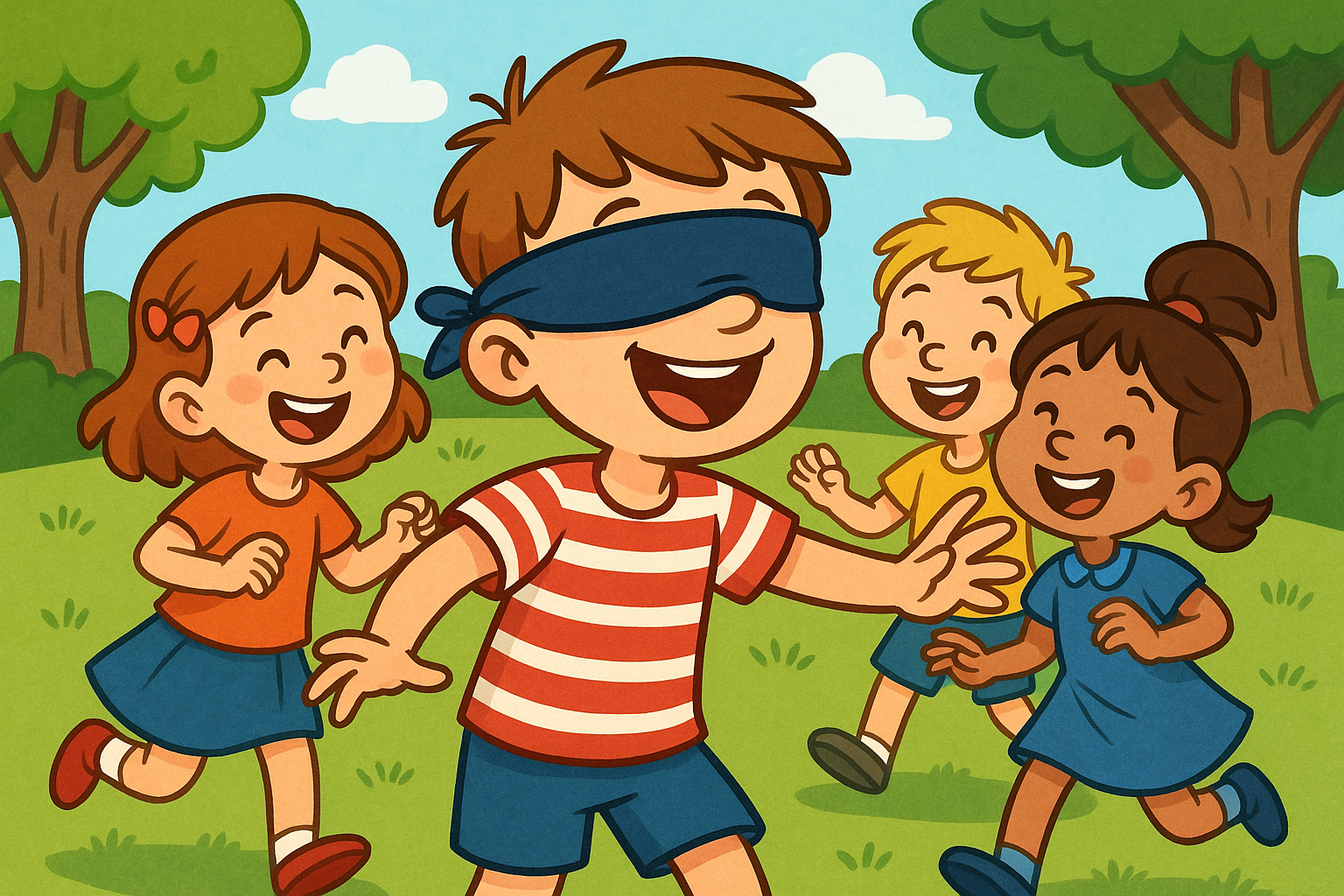
Remember how, as children, we spent hours outside playing hide-and-seek or drawing «hopscotch» squares with chalk on the asphalt? Childhood — is a universal language, and games — are its brightest part. As you learn French, why not dive into this carefree atmosphere and find out what French children's games are called and how they are played? This will not only expand your vocabulary, but also help you better understand the country's culture.
Let's get acquainted with the most popular French children's games!
1. Hopscotch — La marelle
Our beloved «hopscotch» is called la marelle in France. The word comes from the Old French merel, which meant «a small stone» or «a token».
History: The game is believed to have ancient Roman roots. Roman legionaries used huge hopscotch courts up to 30 meters long to train their strength and agility. Over time, the game became smaller and simpler, and children all over Europe fell in love with it.
How to play: The rules are very similar to ours. Children draw a diagram of numbered squares on the ground, often with «earth» (la terre) at the bottom and «heaven» (le ciel) at the top. The player throws a small stone (le palet or le caillou) onto the first square, then hops on one foot (à cloche-pied) through the remaining squares, skipping the one where their stone lies. On the way back, they must pick up the stone and hop out.
2. Hide-and-Seek — Cache-cache
Hide-and-seek — a game known all over the world, and France is no exception. It is called cache-cache (from the verb cacher — to hide).
History: This is one of the oldest games; mentions of it can be found as early as the works of Greek authors of the 2nd century. Its simplicity and universality have made it an all-time hit.
How to play: One player (the «seeker») covers their eyes and counts loudly up to a certain number, for example, 20 or 50. This is often done against a wall or a tree called la cabane (the little house, the base). While they count, the others run off and hide. When the counting is finished, the seeker shouts: «J'arrive!» («Here I come!») and sets off in search. Upon finding someone, they must run back to the «base» and shout the name of the player they found. The hiders' task — is to sneak up to the «base» before the seeker does.
3. Blind Man's Buff — Colin-maillard
Our «blind man's buff» bears the intriguing name Colin-maillard in France. And this name has its own legend.
History: The game is named after a real person — a Flemish warrior named Jean Colin-Maillard, who lived in the 10th century. In battle he was blinded, but despite this, he kept fighting fiercely, swinging his sword (in French, maillet — a hammer, a club) and guided by sounds. His bravery so impressed his contemporaries that a game was named in his honor.
How to play: One player, called Colin-maillard, is blindfolded with a scarf (un bandeau). The other players stand around them. The blindfolded player's task — is to catch (attraper) one of the players and guess by touch (deviner) who it is. If they guess correctly, the caught player becomes the new Colin-maillard.
4. Tag — Le jeu du loup or le jeu du chat
The game in which you run away and chase is most often called le chat («the cat») in France. The one who is «it» is the «cat».
History: Like hide-and-seek, this is one of humanity's basic games, developing speed and reflexes.
How to play: One player is chosen to be the «cat» (le chat). Their task — is to chase (poursuivre) and touch (toucher) any other player. The player who is touched becomes the new «cat». Often, at the moment of touching, they shout: «Chat!». There are many variations: for example, «chat perché» («cat up a tree»), where a player is safe if they have climbed onto some elevation (a bench, a curb).
Conclusion
These simple games — are not just children's entertainment. They are part of the cultural code, a living language that unites generations. The next time you talk with native speakers, try bringing up the games of their childhood. It will surely bring a warm smile and make an excellent conversation topic.
Bon jeu et bon apprentissage du français! (Have fun playing and good luck learning French!)
🇫🇷 A Young Player's Dictionary (Lexique du jeune joueur) 🇷🇺
| French | English translation |
|---|---|
| Le jeu | Game |
| Jouer | To play |
| Le joueur / La joueuse | Player (m) / Player (f) |
| La règle | Rule |
| Gagner | To win |
| Perdre | To lose |
| Compter | To count |
| Se cacher | To hide |
| Chercher | To look for, to seek |
| Trouver | To find |
| Courir | To run |
| Sauter | To jump |
| À cloche-pied | On one foot |
| Attraper | To catch, to grab |
| Toucher | To touch |
| Deviner | To guess |
| Le caillou / le palet | A small stone |
| Le bandeau | A blindfold |
| Avoir les yeux bandés | To be blindfolded |
| Le chat | «Cat» (the player who is «it» in tag) |
| La cabane | «Little house», home base in the game |
| J'arrive! | Here I come! (to seek) |
Comments