Gendarmes and Police in France: Understanding the Differences
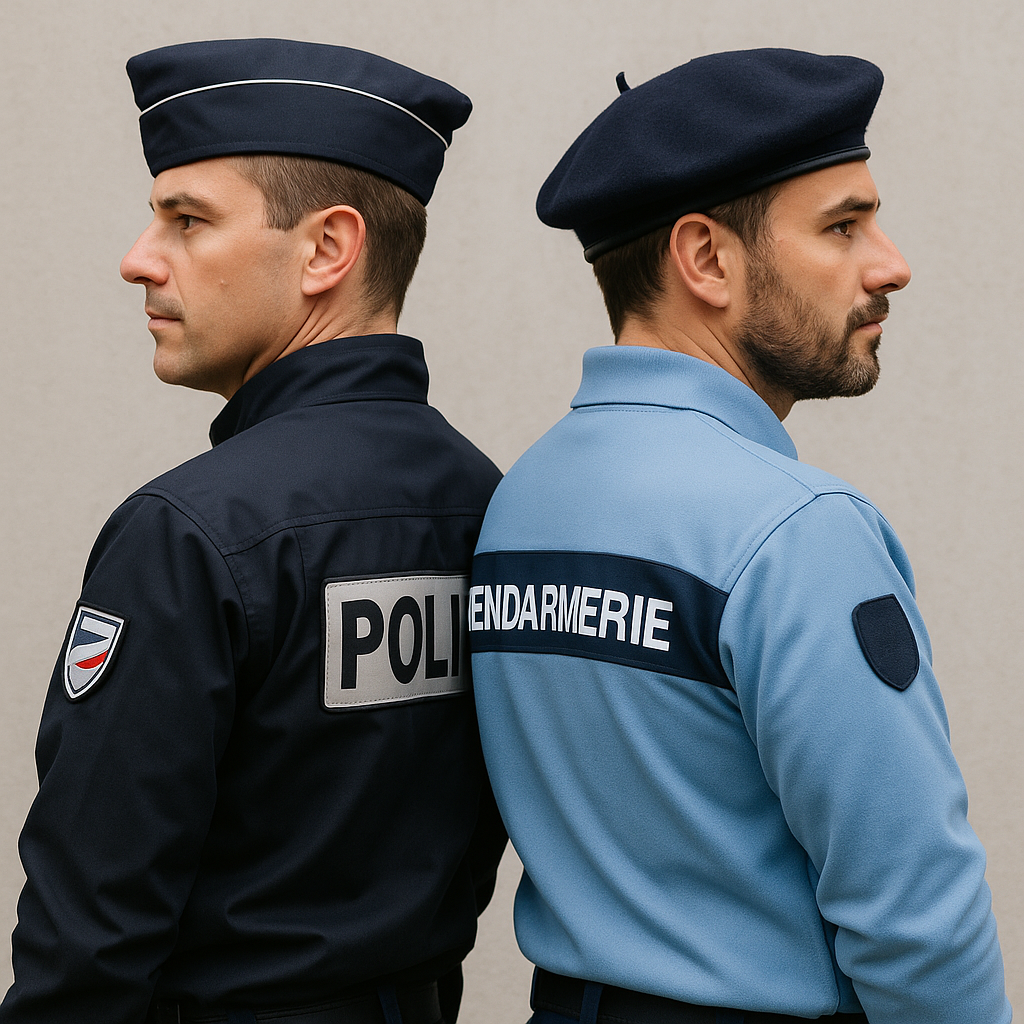
Hello to everyone studying the French language and culture! While traveling around France or simply watching French films and news, you have probably noticed people in different uniforms maintaining order. They may be officers of Police Nationale (the National Police) or Gendarmerie Nationale (the National Gendarmerie). At first glance, they perform similar functions, but there are significant differences between them. Let's find out what they are!
Two Pillars of Law and Order
France has two main national law enforcement structures with police functions:
- La Police Nationale (the National Police)
- La Gendarmerie Nationale (the National Gendarmerie)
Although both structures report to the Ministry of the Interior (Ministère de l'Intérieur) in matters of operational activity and public safety, their status, areas of responsibility and history differ significantly.
La Gendarmerie Nationale: The Military Keeping the Peace
Status: The main difference of the gendarmerie – is that it is a military structure. Gendarmes are military personnel. Historically, they are part of the French Armed Forces, although they report to the Ministry of the Interior for police tasks. The Ministry of Defense is responsible for their status, training and certain specific missions.
Area of responsibility: Traditionally, the gendarmerie is responsible for order outside major cities: in rural areas, small towns and villages (usually with populations of fewer than 20,000 people). They also patrol the main highways, airports and maritime areas, and carry out specific tasks, such as guarding the Élysée Palace (through Garde Républicaine – the Republican Guard, which is part of the gendarmerie).
Functions: Gendarmes perform a wide range of tasks:
1) Police judiciaire: Investigating crimes (criminal cases, theft, assaults).
2) Police administrative: Maintaining public order, patrolling, traffic control, issuing permits.
3)Missions militaires: Participation in military operations abroad (military police), guarding military facilities, specific defense tasks.
History: The gendarmerie – is one of the oldest law enforcement structures in France. Its roots go back to the medieval Maréchaussée (the marshals' mounted police), created to maintain order in rural areas and on the roads. It received its modern name and status during the French Revolution in 1791.
Special features: Gendarmes often live in barracks (casernes) with their families, especially in small settlements. Their uniform is usually blue (dark blue or "bleu gendarme"). The famous special unit GIGN (Groupe d'intervention de la Gendarmerie nationale) – an elite counter-terrorism unit – also belongs to the gendarmerie.
La Police Nationale: A Civilian Force in the Cities
Status: Unlike gendarmes, officers of the National Police – are civil servants (fonctionnaires civils). They do not have military status.
Area of responsibility: The police are responsible for law and order in major cities and urban areas. If you are in Paris, Marseille, Lyon or another big city, it is the Police Nationale that keeps order there.
Functions: The police's tasks are largely similar to those of the gendarmerie in terms of maintaining order and investigations, but with an emphasis on urban specifics:
1) Sécurité publique: Patrolling the streets, preventing offenses, responding to calls.
2) Police judiciaire: Investigating crimes in its own area of responsibility.
3) Renseignement: Gathering information and intelligence (including counter-terrorism).
4) Contrôle aux frontières: Border control (Police aux frontières - PAF).
5) Maintien de l'ordre: Maintaining order at mass events and demonstrations (this is often handled by CRS – Compagnies Républicaines de Sécurité units).
History: The National Police in its modern form – is a younger structure than the gendarmerie. Although police forces existed in cities before, the centralized National Police was created under the Vichy regime in 1941 and reorganized after the Liberation. It incorporated various city police services.
Special features: Police officers usually do not live in barracks. Their uniform is also blue, but it may differ in shade and cut from the gendarmerie's. The police have their own elite units, such as RAID (Recherche, Assistance, Intervention, Dissuasion) and BRI (Brigade de recherche et d'intervention). You can often see BAC (Brigade anti-criminalité) patrols on the streets.
Key Differences (in Brief)
| Feature | Gendarmerie Nationale | Police Nationale |
|---|---|---|
| Status | Military | Civilian |
| Reports to | Ministry of the Interior (operations), Ministry of Defense (status) | Ministry of the Interior |
| Area of operation | Rural areas, small towns | Major cities, urban areas |
| Residence | Often in barracks | Usually not |
| Historical roots | The Middle Ages (Maréchaussée) | A more modern structure |
What Do They Have in Common?
Despite the differences, both structures:
1) Enforce compliance with the laws of France.
2) Investigate crimes and detain suspects.
3) Maintain public order.
4) Report to the Ministry of the Interior in their day-to-day police activities.
5) Have the authority to act throughout the country when necessary (for example, in major investigations or crises).
Conclusion
Now you know the main differences between the gendarmerie and the police in France. Gendarmes – are military personnel who work mainly outside major cities, while the police – are civil servants who maintain order in urbanized areas. Both services play a crucial role in maintaining security and law and order throughout the country. Understanding these differences will help you better navigate French realities and the news.
I hope this article was useful! If you have any questions, or if you have encountered gendarmes or police officers in France, share your experience in the comments! À bientôt!

Comments