French Wines: A Journey Through Tastes and Traditions
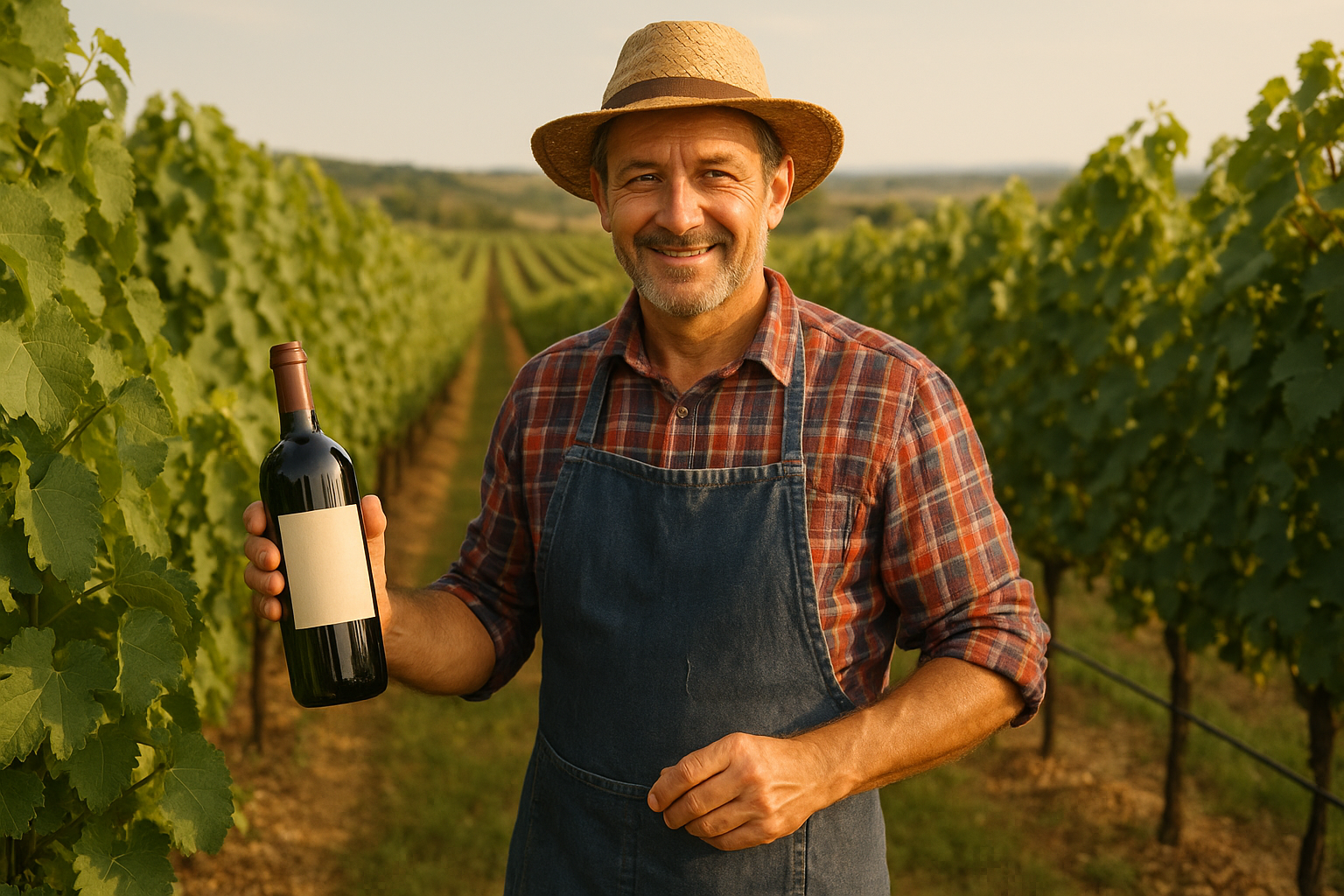
France and wine – are almost inseparable concepts. For many French people, wine – is not just a drink, but a part of history, culture, and even national heritage. For those learning French, getting acquainted with the world of French wines opens up yet another facet of understanding the country.
A Bit of History: How It All Began (Comment tout a commencé)
Winemaking on the territory of modern France has ancient roots.
1. The Gauls and the Romans: Although the grapevine existed here even earlier, it was the Romans, having conquered Gaul in the 1st century BC, who brought with them the culture of viticulture and winemaking. They planted vineyards in the Rhône valley, Burgundy, Bordeaux, and other regions.
2. The Middle Ages and the monasteries: After the fall of the Roman Empire, winemaking traditions were preserved and developed in the monasteries. Monks carefully selected the best plots of land (the future «crus» – crus), perfected vinification methods, and kept detailed records. It was they who laid the foundations of the understanding of «terroir» (terroir).
3. The Modern Era: French wines won popularity at the royal courts of Europe. Regions such as Bordeaux and Burgundy became known for their unique styles.
4. The 19th century and phylloxera: At the end of the 19th century, French (and European) vineyards were struck by a catastrophe – an epidemic of phylloxera, a tiny aphid that destroyed the roots of the vines. The solution was found in grafting European varieties onto phylloxera-resistant American rootstocks. This event had a major impact on winemaking and led to the creation of a quality control system.
The Appellation System: A Guarantee of Quality and Origin (Le système des appellations)
To protect the uniqueness of its wines and guarantee their quality, France developed a complex system of origin control known as Appellation d'Origine Contrôlée (AOC), which is now called Appellation d'Origine Protégée (AOP) at the all-European level.
This system classifies wines into several levels:
1. Vin de France:
- Formerly known as Vin de Table (table wine).
- The most basic category. The wine may be made from grapes grown anywhere in France.
- The label usually indicates the grape variety (if it is a single-variety wine) and the vintage year.
- The production rules are the least strict.
2. IGP – Indication Géographique Protégée:
- Formerly known as Vin de Pays (country wine).
- The wine comes from a specific geographical region (for example, IGP Pays d'Oc from Languedoc-Roussillon).
- The production rules are stricter than for Vin de France and concern grape varieties, yields, and vinification methods.
- It guarantees geographical origin and certain characteristics associated with the region.
3. AOP – Appellation d'Origine Protégée / AOC – Appellation d'Origine Contrôlée :
- The highest quality category.
- It guarantees that the wine was produced in a strictly defined territory (terroir) in compliance with strict rules. These rules concern:
-- The geographical boundaries of the appellation.
-- Permitted grape varieties (cépages).
-- Maximum yields.
-- Methods of vine cultivation and vinification.
-- Minimum alcohol content.
-- Mandatory tasting before release.
- Each appellation has its own unique characteristics, determined by the combination of soil, climate, traditions, and grape varieties.
- The key concept here – is terroir (terroir). This French word, which has no exact equivalent in other languages, describes the unique combination of natural factors (soil, climate, relief, slope exposure) and human intervention that give a wine its individuality.
The Main Wine Regions of France (Les grandes régions viticoles de France)
France has many wine regions, each with its own character. Here are the most famous:
1. Bordeaux:
- Located in southwestern France, around the city of Bordeaux, along the Garonne and Dordogne rivers.
- Famous for its red wines based on Cabernet Sauvignon, Merlot, and Cabernet Franc. It also produces dry and sweet white wines (Sauvignon Blanc, Sémillon).
- Famous appellations: Médoc, Pauillac, Margaux, Saint-Émilion, Pomerol, Sauternes.
2. Burgundy (Bourgogne):
- Located in eastern France.
- Famous for elegant red wines made from Pinot Noir and refined white wines made from Chardonnay.
- The concept of «terroir» is taken to its absolute here, with a multitude of small plots («climats») producing wines with unique nuances.
- Famous appellations: Chablis, Côte de Nuits (Gevrey-Chambertin, Vosne-Romanée), Côte de Beaune (Pommard, Meursault, Puligny-Montrachet), Mâconnais, Beaujolais (although Beaujolais is often set apart, it is part of Greater Burgundy and is famous for wines made from the Gamay grape).
3. Champagne:
- Located in northeastern France.
- The birthplace of the famous sparkling wine – champagne, produced using the traditional method (méthode traditionnelle or méthode champenoise) from the Chardonnay, Pinot Noir, and Pinot Meunier grape varieties.
4. The Rhône Valley (Vallée du Rhône):
- Stretches along the Rhône river in southeastern France.
- Divided into the Northern Rhône (powerful reds from Syrah, aromatic whites from Viognier, Marsanne, Roussanne) and the Southern Rhône (mainly red blends based on Grenache, Syrah, Mourvèdre).
- Famous appellations: Côte-Rôtie, Hermitage, Condrieu (Northern Rhône); Châteauneuf-du-Pape, Gigondas, Côtes du Rhône (Southern Rhône).
5. The Loire Valley (Vallée de la Loire):
- Stretches along the longest river in France – the Loire.
- Famous for an enormous variety of styles: dry, sweet, and sparkling white wines (especially from Sauvignon Blanc in Sancerre and Pouilly-Fumé, and Chenin Blanc in Vouvray and Savennières), light reds (from Cabernet Franc in Chinon and Bourgueil), and rosé wines.
6. Alsace:
- Located in the northeast, on the border with Germany.
- Known for its aromatic single-variety white wines made from Riesling, Gewurztraminer, Pinot Gris, and Muscat. The wines are often bottled in the region's characteristic tall, narrow bottles (the «Alsace flute»).
7. Provence:
- In southeastern France, on the Mediterranean coast.
- The world leader in the production of high-quality rosé wines (vins rosés). It also produces red and white wines.
8. Languedoc-Roussillon:
- The largest wine region of France in terms of vineyard area and production volume, located in the south.
- Produces a wide range of wines, from simple table wines to high-quality AOPs. In recent decades, a true quality revolution has taken place here.
French Wines in the World (Les vins français dans le monde)
For centuries, French wines have been considered the benchmark of quality and style. Many classic French grape varieties (Cabernet Sauvignon, Merlot, Pinot Noir, Chardonnay, Sauvignon Blanc, Syrah) have spread throughout the world and become international. French winemaking techniques and classifications have also had an enormous influence on winemaking in other countries.
Despite growing competition from New World wines (the USA, Australia, Chile, Argentina, South Africa) and other European countries (Italy, Spain), French wines continue to hold leading positions on the world market, especially in the premium segment. They are associated with prestige, quality, and rich traditions.
How This Field Is Developing Today (Comment ce domaine évolue-t-il?)
Modern French winemaking is not standing still and faces new challenges and trends:
- Sustainable viticulture (Viticulture durable): Interest is growing in organic (biologique / bio) and biodynamic (biodynamique) winemaking. More and more estates are abandoning chemical fertilizers and pesticides, striving for harmony with nature.
- Climate change (Changement climatique): Rising temperatures and changing rainfall patterns are forcing winemakers to adapt: experimenting with new varieties, changing vineyard practices, and sometimes even relocating vineyards to cooler areas.
- Natural wines (Vins naturels): The movement for «natural wines» – wines made with minimal intervention in the production process, often without added sulfur or with only a minimal amount of it – is gaining popularity.
- Innovation and tradition: Winemakers are seeking a balance between preserving centuries-old traditions and introducing modern technologies to improve quality and express the uniqueness of their terroir.
- Focus on the consumer: Producers are trying to better understand the needs of modern consumers, offering lighter, fresher wine styles, as well as improving communication and marketing.
Conclusion
The world of French wines is vast and multifaceted. Getting to know it – is a fascinating journey that allows you not only to enjoy magnificent drinks, but also to gain a deeper understanding of France's culture and history. Don't be afraid to try, compare, and discover new tastes. As you study French, you will be able to read labels, understand wine descriptions, and talk with winemakers, which will make your experience even richer.
À votre santé! (To your health!)

Comments