Georges Simenon: Master of the Detective Genre
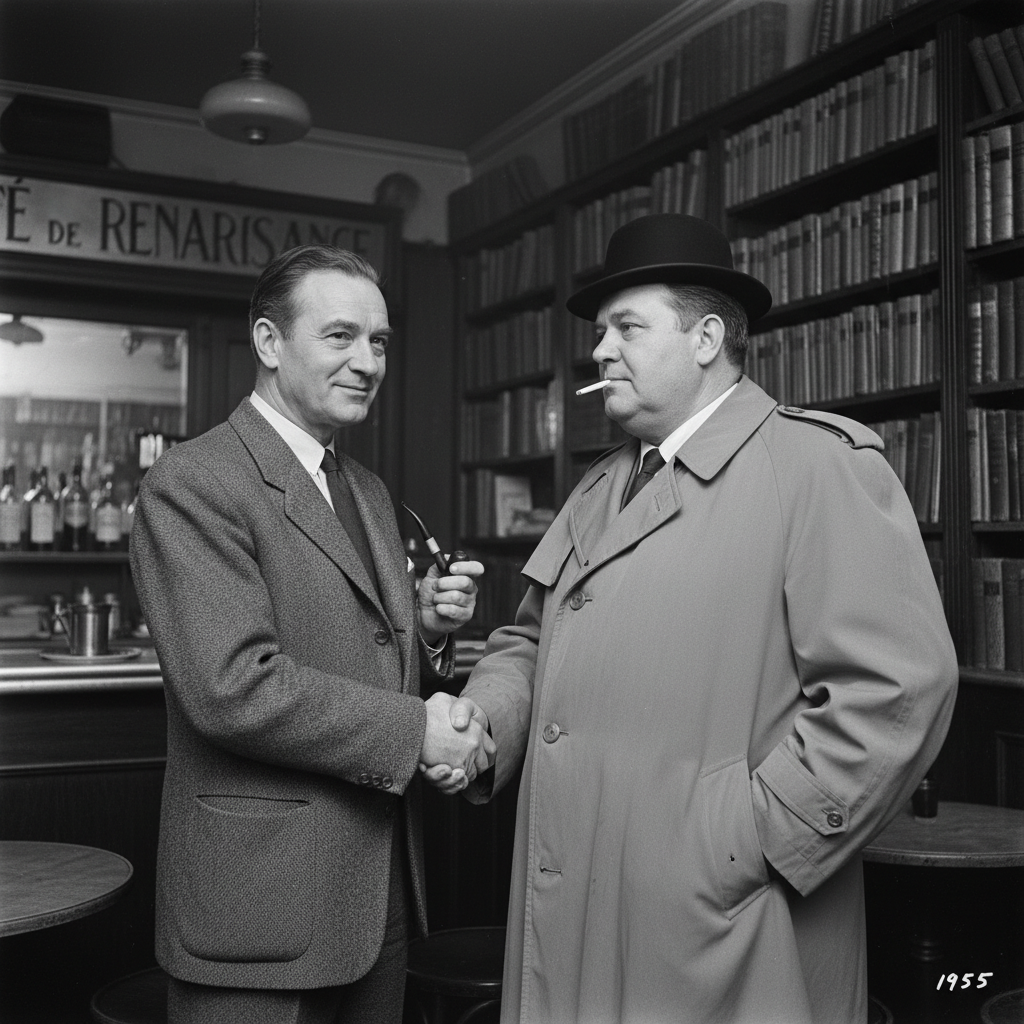
Today we're going to talk about Georges Simenon, the Belgian author who became a legend of detective literature. His books not only grip you with their plots, but also help you grasp the subtleties of the French language through their dialogues and descriptions. Let's go through his story, his work, and some interesting facts from his life.
Biography: From Liège to World Fame
Georges Simenon was born on February 13, 1903, in the city of Liège in Belgium. His real name — was Georges Joseph Christian Simenon. The family wasn't wealthy: his father worked as an accountant, and his mother took care of the household. From childhood, Georges loved to read, especially works by Victor Hugo and Alexandre Dumas, which inspired him to pursue a literary career.
At 16, he dropped out of school and started working as a journalist at the local newspaper "Gazette de Liège". It was his first experience with writing — he wrote reports, satirical columns, and even humorous pieces. In 1922, Simenon moved to Paris, where he began writing under pseudonyms. He worked as a secretary for wealthy people, traveled, and gained experience.
In the 1930s, Simenon began creating his famous detective novels. He lived in France, the USA, and Switzerland, married twice, and had four children. The writer passed away on September 4, 1989, in Lausanne, of cancer. Over his lifetime, he wrote more than 400 works, including novels, novellas, and memoirs.
His Work: Commissioner Maigret and Psychological Realism
Simenon — is above all a master of the "roman noir", or psychological detective story. His most famous character — is Commissioner Jules Maigret, a Parisian police officer who solves crimes with the help of intuition and an understanding of human psychology, not just evidence. The Maigret series includes 75 novels and 28 short stories written between 1931 and 1972. These books have been translated into dozens of languages and adapted for the screen many times (for example, in TV series starring Jean Gabin or Rowan Atkinson).
Besides detective stories, Simenon wrote "hard novels" (romans durs) — serious psychological dramas about ordinary people, their passions and tragedies. Examples: "Le Chat" (The Cat), "La Neige était sale" (The Snow Was Dirty), and "L'Homme qui regardait passer les trains" (The Man Who Watched the Trains Go By). His style is simple and concise: short sentences, realistic dialogue, and a focus on emotions. Simenon said he writes "comme on parle" (the way people speak), which makes his books perfect for French learners — the language is lively and not too difficult.
In total, Simenon created around 200 novels under his own name and another 200 under pseudonyms. He claimed he could write a book in 11 days! His work influenced many authors, including Agatha Christie and contemporary writers.
Interesting Facts from His Life
- The writer's prolific output: Simenon boasted that he had slept with more than 10,000 women. That's an exaggeration, of course, but it reflects his turbulent personal life. He even wrote an autobiography, "Mémoires intimes" (Intimate Memoirs), in which he shares the details.
- His method of working: The writer followed a strict ritual: before writing a book, he would put on the same shirt, smoke a pipe (like Maigret), and lock himself in a room for several days. He drank lots of coffee and ate little to stay focused.
- Scandals and recognition: In the 1940s, Simenon was accused of collaborating with the Nazis during the occupation of France, but he was later cleared. Despite this, he became a member of the French Academy and received numerous awards. Interestingly, he turned down the Nobel Prize in Literature because he didn't want to be an "official" writer.
- Belgian roots: Although Simenon wrote in French, he always emphasized his Belgian origins. Liège has a museum dedicated to him, with items from his life.
- Screen adaptations: Simenon's books have been adapted for the screen more than 500 times! If you're learning French, watch the "Maigret" TV series in the original language — it's great listening practice.
Georges Simenon — is not just a writer, but a phenomenon that shows how literature can be accessible and profound at the same time. If you're new to French, start with the simple Maigret short stories — they'll help you expand your vocabulary and understand the nuances of the language.
A Dictionary of Useful Words on the Topic
Here's a small dictionary of French words and expressions related to Simenon's life and work.
- Roman policier [ʁɔmɑ̃ pɔlisje] — A detective novel.
- Commissaire [kɔmisɛʁ] — A (police) commissioner.
- Enquête, f [ɑ̃kɛt] — An investigation.
- Psychologique [psikɔlɔʒik] — Psychological.
- Pseudonyme [psødɔnim] — A pseudonym.
- Autobiographie, f [otɔbjɔɡʁafi] — An autobiography.
- Pipe, f [pip] — A (smoking) pipe.
- Liège [ljɛʒ] — Liège (the city).
- Écrivain, m [ekʁivɛ̃] — A writer.
- Intrigue, f [ɛ̃tʁiɡ] — An intrigue, a plot.

Comments