The Red Guide That Changed the World: All About the Michelin Guide
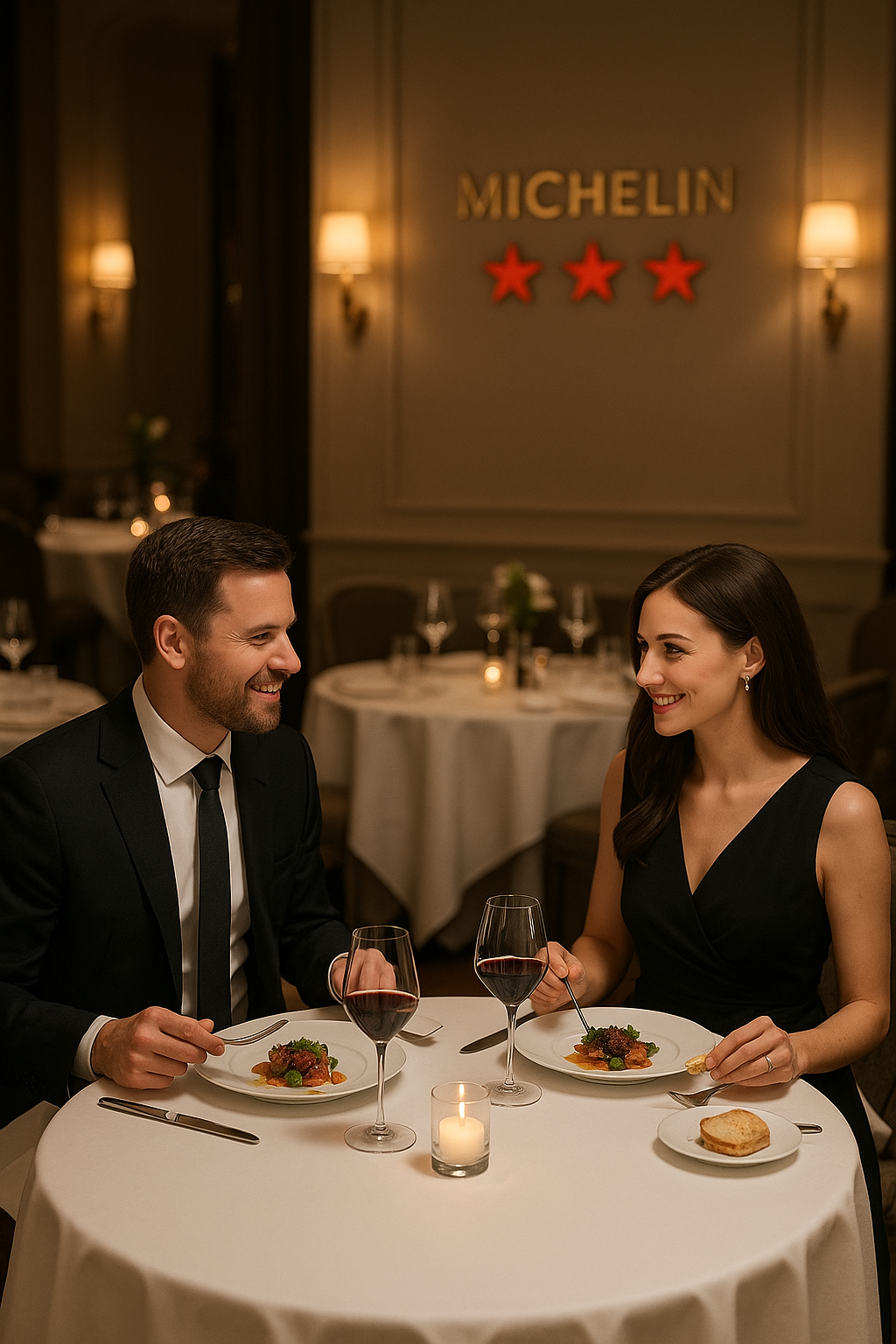
Everyone who studies French sooner or later comes across the concept of «high cuisine» (haute cuisine). And where there is high cuisine, there it is — the legendary red Michelin Guide (le guide Michelin). For chefs around the world, its stars are like the «Oscar» of the film world. But how did a simple handbook for motorists turn into the most influential restaurant rating in the world? Let's find out!
History: From Tires to Stars
It all began in 1900 in France. Brothers André and Édouard Michelin, the founders of that very tire company, faced a problem: there were fewer than 3,000 cars in the country. To encourage people to travel more (and, accordingly, to buy tires more often), they came up with a brilliant marketing move.
The brothers published a small free guide for motorists. It contained useful information: maps, lists of gas stations, mechanics, and, of course, hotels and restaurants.
Until 1920, the guide was free, until André Michelin saw his creation propping up the leg of a workbench in one of the workshops. He decided that «man only truly respects what he pays for». The guide went on sale and quickly gained popularity. In 1926, it awarded a single star for the first time to mark outstanding restaurants, and by the mid-1930s the famous three-star system had been formed.
How Does the Michelin System Work?
The secret of the guide's success and authority lies in its principles. The main one is anonymity.
Michelin inspectors are full-time employees who travel incognito, order food like ordinary diners, and always pay their own bill. They assess the cuisine exclusively. Interior, service, or atmosphere have no influence on the awarding of stars, although they are noted in the guide with special icons (a crossed fork and spoon).
Criteria for awarding stars:
- Quality of ingredients.
- The chef's mastery, cooking technique, and harmony of flavors.
- The personality of the chef expressed in his cuisine.
- Value for money.
- Consistency of the quality of dishes from visit to visit.
What do the stars mean?
- ⭐ One star (une étoile): A very good restaurant in its category. (Très bonne table dans sa catégorie).
- ⭐⭐ Two stars (deux étoiles): Excellent cooking worth making a detour for on your journey. (Table excellente, mérite un détour).
- ⭐⭐⭐ Three stars (trois étoiles): Exceptional cuisine worth a journey of its own. (Cuisine unique, vaut le voyage).
Besides the stars, there are other important distinctions:
- Bib Gourmand: An award for restaurants offering excellent food at moderate prices.
- Green star (l'étoile verte): Introduced in 2020 to reward restaurants that care about the environment and operate on the principles of sustainable development.
Interesting Facts
- The pressure of the stars: Receiving a star is a dream, but keeping it is enormous pressure. Some chefs have voluntarily given up their stars to be able to work more calmly and create without looking over their shoulder at the inspectors.
- Gourmet capital: Contrary to stereotypes, the city with the most Michelin stars is not Paris, but Tokyo.
- A star for street food: In 2016, the guide awarded a star to two street food stalls in Singapore for the first time, proving that fine cuisine can be affordable.
The Future of the Michelin Guide
In the era of blogs, Instagram, and TripAdvisor, the Michelin Guide faces new challenges. However, it is not standing still: it is actively developing digital platforms (a website and an app), expanding its geography, and introducing new categories, such as the «Green Star», to stay relevant.
From a simple guidebook, the Michelin Guide has grown into a global benchmark of quality. It continues to shape gastronomic trends and to inspire chefs and gourmets all over the world. So, when planning a trip to France, don't forget to look into the red guide — perhaps it will lead you to the best dinner of your life!
Your Little Gourmet Glossary (Votre petit lexique du gourmet)
- Le guide Michelin — the Michelin Guide.
- Une étoile — a star.
- Un chef — a chef.
- La gastronomie — gastronomy, the art of preparing and serving fine food.
- La haute cuisine — high cuisine.
- Une très bonne table — literally «a very good table», means a very good restaurant.
- Mérite un détour — worth making a detour (about two stars).
- Vaut le voyage — worth a whole journey (about three stars).
- Bib Gourmand — the name of an award for restaurants with good food at an affordable price (after Bibendum, the symbol of the Michelin company).
- L'addition, s'il vous plaît — The bill, please. (A key phrase in any restaurant!)
- Réserver une table — to book a table.
- Le plat du jour — the dish of the day.
- Un sommelier — a sommelier, a wine specialist.
- Bon appétit! — Enjoy your meal!
Comments