The Marquis de La Fayette: Hero of Two Worlds and a Symbol of Freedom
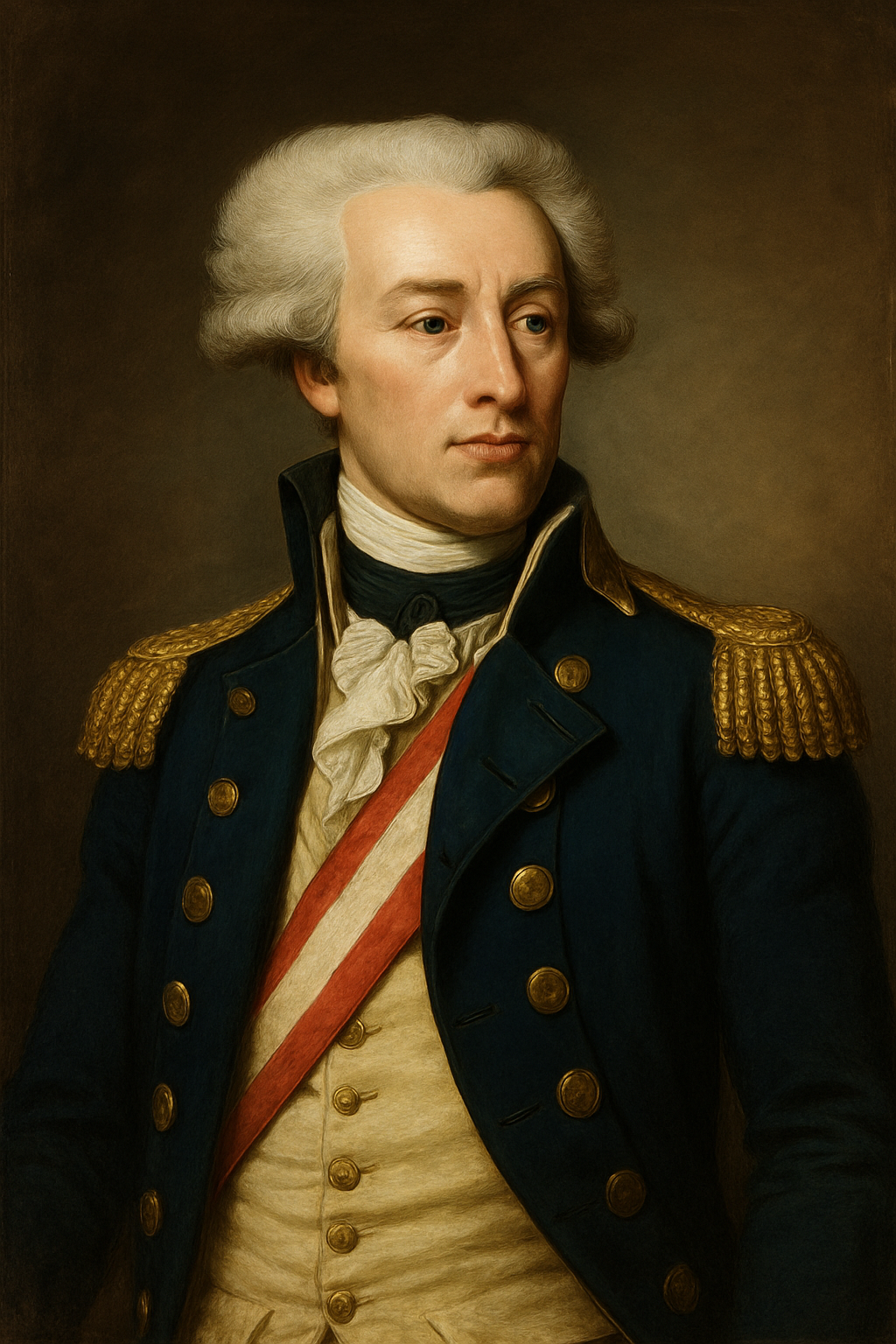
Hi, friends studying the French language and culture! Today we will talk about a truly unique personality – a man whose name is written in golden letters in the history of two great nations at once. We are speaking of Marie-Joseph Paul Yves Roch Gilbert du Motier, Marquis de La Fayette, or simply La Fayette. This French aristocrat became a symbol of the struggle for freedom on both sides of the Atlantic, earning the nickname "Hero of Two Worlds" (le Héros des Deux Mondes).
The Aristocrat's Youth and the Call of Freedom
La Fayette was born in 1757 into a noble and wealthy family in Auvergne. Orphaned at an early age, he inherited an enormous fortune. At 16, he married Adrienne de Noailles, a member of one of the most influential families in France. It seemed that a brilliant career at court and in the army awaited him.
However, the young marquis was captivated by the ideas of the Enlightenment – freedom, equality, human rights (la liberté, l'égalité, les droits de l'homme). When news of the American colonies' struggle for independence from the British Empire reached Europe, La Fayette was fired with the idea of helping them. For him, it was not just a war, but the embodiment of the ideals he believed in.
La Fayette in the American War of Independence
Despite the ban of King Louis XVI, who did not want to spoil relations with England (at least for the time being), the 19-year-old La Fayette used his own funds to fit out the ship "Victory" (La Victoire) and sailed for America in 1777.
His enthusiasm and noble birth impressed the Continental Congress, which granted him the rank of major general (général de division). At first, this was more of an honorary title, but La Fayette quickly proved his bravery and devotion to the cause. He became a close friend and confidant of George Washington, who treated him almost like a son.
- La Fayette took part in many battles
- He was wounded in the leg at the Battle of Brandywine.
- He proved himself to be a skilled commander.
- He played an important diplomatic role, persuading the French government to provide the Americans with more substantial military and financial assistance.
- He commanded American troops in Virginia and played a key role in the Siege of Yorktown (1781), which led to the capitulation of the British army and effectively ended the war.
Returning to France in 1782, La Fayette was welcomed as a national hero.
La Fayette's Role in the French Revolution
The ideals La Fayette had fought for in America soon began to stir his homeland as well. When the revolution broke out in France (la Révolution française), La Fayette found himself at the center of events.
- He was elected deputy for the nobility to the Estates-General (1789).
- It was he who presented one of the first drafts of the Declaration of the Rights of Man and of the Citizen (Déclaration des Droits de l'Homme et du Citoyen), largely inspired by the American Declaration of Independence.
- After the storming of the Bastille, he was appointed commander of the Paris National Guard (Garde nationale) – the armed force of the revolution. It was he who proposed combining the colors of Paris (blue and red) with the white of the Bourbons, thus creating the famous French tricolor (le drapeau tricolore).
La Fayette was a supporter of constitutional monarchy (monarchie constitutionnelle), trying to find a compromise between the king and the revolutionary people. He strove to protect both order and freedoms. However, the revolution was becoming increasingly radical.
His position became precarious. Royalists considered him a traitor to the aristocracy, while radical revolutionaries (the Jacobins) – considered him not decisive enough and suspected him of sympathizing with the monarchy. The shooting of a demonstration on the Champ de Mars in 1791, which he ordered as commander of the guard to restore order, badly damaged his reputation.
When the monarchy was overthrown in 1792, La Fayette spoke out against the radicals. He was declared a traitor. While attempting to flee, he was captured by the Austrians and spent more than five years in captivity.
Later Years and Legacy
La Fayette was released thanks to the efforts of Napoleon Bonaparte, but he played no active role in the politics of the Empire, remaining true to his republican ideals.
In 1824-1825, he made a triumphant tour of the United States, where he was received as a living legend, the last of the great generals of the Revolution.
La Fayette died in 1834 in Paris. He was buried in the Picpus Cemetery next to his wife. According to his will, his grave was covered with earth brought from Bunker Hill in America – a symbolic union of the two worlds for whose freedom he fought.
Interesting Facts about La Fayette:
- His full name: His full name – is one of the longest in history: Marie-Joseph Paul Yves Roch Gilbert du Motier, Marquis de La Fayette.
- Honorary citizen of the USA: La Fayette – is one of the few people in history to be awarded the title of Honorary Citizen of the United States (in his lifetime and posthumously).
- Soil from the battlefield: The soil for his grave was indeed brought from Bunker Hill, the site of one of the early battles of the American Revolution.
- Streets and cities: Countless streets, squares, parks, and even cities are named after La Fayette in both France and the USA (Lafayette Square opposite the White House, the cities of Lafayette in Louisiana and Indiana, etc.).
La Fayette and Learning French
By studying La Fayette's life, you not only immerse yourself in a gripping story, but also encounter concepts important to French culture and language: la liberté, la révolution, les droits de l'homme, l'aristocratie, la monarchie, la république. Understanding his role helps you better understand the values that shaped modern France.
Conclusion
The Marquis de La Fayette – is a complex and multifaceted figure. An idealist, an aristocrat, a revolutionary, he lived through turbulent eras, always striving to follow his principles. His life – is a bridge between the Old World and the New, between the age of absolutism and the birth of modern democracies. The "Hero of Two Worlds" will forever remain a symbol of transatlantic friendship and an undying striving for freedom.
We hope this article was interesting and useful for you!

Comments